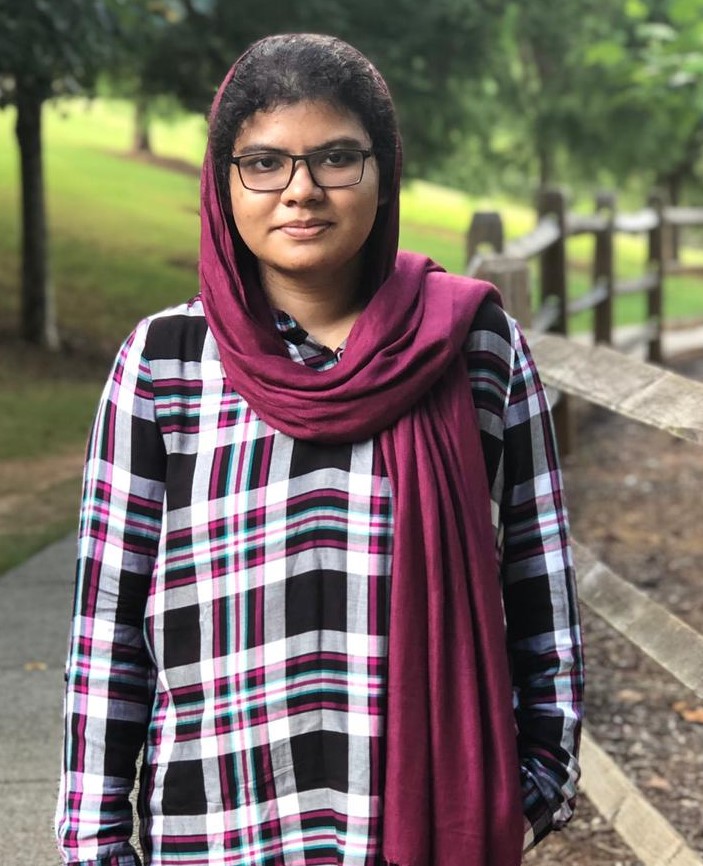
Nadia Tasnim Ahmed

Nadia Tasnim Ahmed

ORISE Fellow

Food and Drug Administration

Biography

Nadia Tasnim Ahmed, PhD, is a highly motivated pharmaceutical scientist with extensive experience in analytical method development, proteomics, and nanotechnology. She brings demonstrated expertise in cutting-edge analytical techniques, including mass spectrometry (LC-MS, CE-MS, and Ion Mobility-MS), quantitative proteomics, and pharmaceutical formulation. Nadia leads multidisciplinary research projects, driving advancements in synthetic oligonucleotide analysis, cancer immunotherapy, and drug development.

She excels in method validation, bioinformatics, and regulatory compliance, with a proven track record of securing grants and publishing in peer-reviewed journals. Nadia has designed and taught graduate-level courses, mentored students, and collaborated effectively with cross-functional teams. Proficient in data analysis using R, Python, and specialized software, she maintains a strong focus on innovation and regulatory precision.

Interests
  • Proteomics
  • Different Mass Spectrometry Techniques (LC-MS, CE-MS, IM-MS)
  • Omic Data Science
  • Oligonucleotide Analysis
Education
  • PhD in Pharmaceutical Engineering, 2024

    Virginia Commonwealth University

  • MS in Pharmaceutical Nanotechnology, 2020

    University of South Florida

  • M.Pharm in Pharmaceutical Chemistry, 2019

    University of Dhaka

  • B.Pharm Professional (5 years) in Pharmacy, 2017

    University of Dhaka

Experience


ORISE Fellow
Center for Drug Evaluation and Research (CDER), Food and Drug Administration (FDA)
November 2024 – Present St. Louis, Missouri

Responsibilities include:

  • Developing a Cyclic Ion Mobility-Mass Spectrometry (Cyclic IM-MS) method for diastereomeric analysis of synthetic oligonucleotides, aiming for high precision and regulatory compliance.
  • Conducting diastereomer profiling and impurity characterization of oligonucleotide drug products, with emphasis on optimized analytical separation.


Graduate Assistant
Center for Pharmaceutical Engineering and Science, School of Pharmacy, Virginia Commonwealth University
August 2020 – November 2024 Richmond, Virginia

Responsibilities include:

  • Served as a Graduate Research and Teaching Assistant
  • During the second year as a TA, worked on designing the “PESC 709: Pharmaceutical Engineering Lab II” course and establishing a new teaching lab
  • TA responsibilities involved syllabus design, paper grading, and delivering lectures
  • As an RA, engaged in the project titled “LC-MS based quantitative proteomic analysis of macrophages”
  • RA responsibilities involve literature review, research design, data collection, statistical analysis, collaboration with different research groups, and communication of findings through conference presentations and journal publications


Summer ORISE Fellow
Center for Drug Evaluation and Research (CDER), Food and Drug Administration (FDA)
May 2024 – September 2024 St. Louis, Missouri

Responsibilities include:

  • Established and validated a microchip CE-MS method utilizing ZipChip for quantitative impurity analysis in synthetic oligonucleotides, ensuring robustness, sensitivity, precision, accuracy, and linearity according to regulatory guidance.
  • Conducted characterization and impurity profiling of complex drug products using advanced microchip CE-MS technology, studying matrix effects on the analytical process.
  • Gained proficiency in chip-based CE separation and high-resolution mass spectrometry, applying new pharmaceutical analysis techniques beyond formal academic programs.
  • Prepared Standard Operating Procedures (SOPs) to ensure compliance and consistency in analytical methods.
  • Utilized data processing software to analyze complex datasets, contributing to innovative research in synthetic oligonucleotide analysis.
  • Prepared periodic work summaries and delivered weekly presentations to the research team.
  • Compiled a technical report on the development and validation of the ZipChip CE-MS method for oligonucleotide analysis.
  • Delivered a final oral presentation on project findings to the entire office, showcasing research outcomes and methodologies.
  • Completed FDA 101 training course.
  • Completed a 2-month workshop on Physiologically-Based Pharmacokinetic Modeling, conducted by Dr. Raymond Yang.


Research Assistant
Department of Internal Medicine, University of South Florida
August 2019 – May 2020 Tampa, Florida

Responsibilities include:

  • Responsibilities encompassed literature review, research design, data collection, statistical analysis, collaboration with team members, and communication of findings through conference presentations and journal publications
  • Contributed to a project focused on formulating a lipid-based targeted nanocarrier for intranasal codelivery of lapatinib and ketoconazole
  • Also worked on another project titled “Preclinical efficacy of TN-1008”


Research Assistant
Department of Pharmaceutical Chemistry, Faculty of Pharmacy, University of Dhaka
October 2017 – December 2018 Dhaka, Bangladesh

Responsibilities include:

  • evaluating different ways of synthesizing nanoparticles, conjugation with antibiotics, characterization of both particles and complexes, testing their antimicrobial properties, analyzing, and documenting all findings, and writing reports.


Product Development Officer
Radiant Pharmaceuticals Ltd.
July 2017 – August 2018 Gazipur, Bangladesh

Responsibilities include:

  • Compiling recipes and annexures for submission to the Drugs Administration.
  • Generating requisitions for raw and packaging materials for new products in accordance with specified criteria.
  • Overseeing the production process, including lab batches, pilot batches, stability batches, trial batches, and scale-up batches for new products.
  • Collaborating with Production, QA, Engineering, Marketing, TSD, and Commercial departments.
  • Reviewing formulations of existing products in response to product or market complaints, stability-related issues, or cost-saving requirements.
  • Developing and updating documentation such as specifications, formulations, process sheets, validation protocols, product manuals, dossiers, procedures, and instructions adhering to cGMP & ISO standards.
  • Conducting analytical method development in line with USP, BP, and other compendia and formularies.
  • Performing stability studies as outlined in the protocol.

Accomplishments

Excellence in Pharmaceutical Engineering Award
Excellence in student research on the project titled “Preclinical efficacy of TN-1008”
National Science and Technology Fellowship for Master’s Research

Projects

Adar Gene Interference for Cancer Immunotherapy
The adenosine deaminase acting on RNA (ADAR) enzymes that have been identified to specifically recognizes and edits double-stranded RNA (dsRNA), catalyze the Adenosine-to-Inosine (A-to-I) RNA editing. They are widely expressed in most of higher eukaryotes, where tens of thousands of posttranscriptional editing of A-to-I conversions happen in inverted repeats that form long dsRNAs such as the Alu element.
Lapatinib and Ketoconazole Combination Therapy using Novel Lipid Micellar Nanoparticles for Treatment of Lung Cancer
According to American Cancer Society, lung cancer was accountable for over 142,000 deaths in the USA in 2019. About 20% of all NSCLC patients are expected to harbor an EGFR activating mutation.
Radioimmunotherapy for glioblastoma
GBM is the most common and lethal malignant primary brain tumor in adults, and current standardof-care treatment has only limited therapeutic efficacy. We propose to develop and test a novel radioimmunotherapy strategy by rationally combining conformal radiation, a clinically translatable neoantigen nanovaccine, and immune checkpoint blockade to promote tumor response and prolong survival in an orthotopic preclinical GBM model.
Preclinical Safety and Efficacy of TN1008
In the realm of cancer treatment, conventional therapies frequently fall short in achieving complete tumor eradication and preventing recurrence or metastasis in lung cancer patients. A significant contributing factor to these limitations is the presence of cancer stem cells (CSCs).
Synthesis of Penicillin Nanoparticle Conjugates and Its Functional Characterization against Resistant Bacteria
Nanotechnology is a rapidly developing field of new therapeutic and diagnostic concept in all areas of medicine. Due to unique characteristics, nanoparticles are considered to have wide applications in detection of biomolecules, drug delivery and release.

Conference Presentations

Skills

Computational
R Programming
GrapdPad Prism
JMP
Design of Experiment (DOE)
Proteome Discoverer
Byonic
ImageJ
FlowJo
Python
Bioinformatic Analysis
gprofiler, GSEA, cytoscape
Chromeleon Chromatography Data System Software (CDS)
XCalibur
FreeStyle
Machine Learning Basics
Gastro Plus
Laboratory
Cell Culture
Sphere Assay
ELISA
qRT-PCR
Western Blotting
Flow Cytometry
Immunohistochemistry
Confocal Microscopy
gel electrophoresis
SDS-PAGE
Tissue dissection
Transfection
siRNA
Liposomal Formulation
physical and chemical analysis of different pharmaceutical formulations
Analytical Chemistry
HPLC
UV-vis spectroscopy
IR spectroscopy
NMR spectroscopy
TGA
SEM, TEM
LC-MS
ETD, HCD, CID
IR spectroscopy
Proteomics and Glycomics
Proteomic Analysis; label free, SILAC, TMT
Glycomics
Peptide mapping
PTM Analysis
glycan mapping

Contact